
I believe in contextualisation, of putting off my own cultural baggage to take up another culture. I believe in it as an act of love, because it communicates the dignity of that culture and an act of humility, because it doesn’t assume that my culture is superior. People like Roberto […]
Estimated reading time: 4 minutes

When I began this series in 2010, we were part way through the CMS Australia application process. Now we’re nearing the end of the final stage, the five-month intercultural training course. For the past few years, however, we’ve been working on partnerships. One dimension of this is the online tools […]
Estimated reading time: 4 minutes

This article from 2009 outlines the state of maternal health care in Tanzania. (H/T Katie) Many of the concerns here are central to why we believe university ministry is so important in Tanzania. Here’s a summary: Pregnancy and childbirth kill more than 536,000 women a year, more than half of them […]
Estimated reading time: 3 minutes

A few years ago, I wrote a series for this blog on weakness. I was coming at it from feeling reasonably competent in the tasks given to me and trying to work out if that was OK. My question wasn’t about whether I was competent enough to do what God […]
Estimated reading time: 6 minutes
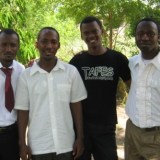
Part 6/6 in a series on the history of Tanzanian universities We’ve sketched out a brief history of Tanzanian universities: postcolonialism, founding and accreditation, the 1960s-70s, 2001 and the present day. There’s a range of implications for student ministry to do with things like: The legitimacy of student ministry in […]
Estimated reading time: 3 minutes

Part 4/6 in a series on the history of universities in Tanzania A big change for Tanzanian universities, and for much of education in Tanzania generally, came in 2001 with the government’s Primary Education Development Plan, a push by the government to raise the standard of education and increase the […]
Estimated reading time: 1 minute

Part 3/6 in a series on the history of Tanzanian universities It’s often said that the key to understanding the last 50 years of Tanzanian history is the legacy of Julius Nyerere. This is also a useful lens for understanding the educational philosophy and development of Tanzanian universities.
Estimated reading time: 3 minutes
 Meet Jesus at uni